It is always insightful to listen to any literary creation in its original language. These narrations show the intensity in ''The Battle of Maldon'' and the playful rhymes in ''The Canterbury Tales''.
">
">
Showing posts with label Canterbury Tales. Show all posts
Showing posts with label Canterbury Tales. Show all posts
Monday, 15 November 2010

The Medium

He loves religion and the people
that redeem their sins;
his little putrid fellow always bring news
about the next victim under fire.
He follows the Lord rules,
but he does whatever he wants;
he is the protector of his people,
saints belogings and bones.
His good will always is rewarded
with his big wallet,
and his innocence and honesty
can be clearly show in the soul and body.
POSTED BY BRIAN PAEZ
Canterbury-Riddles
1.
A well dressed man going in pilgrimage to Canterbury is accompanied by his tedious talk about his increase of capital and the need of sea-police here and there. He is the expert of experts at dabbling in exchanges, as in loans, bargains, and negotiation. An excellent fellow, but neither I nor you would never know his name.

2.
A thin gentleman, riding a horse thinner than him, carries a sober stare with him to Canterbury. An unworldly air surrounds him, he is grateful to those who helped him and so he prays for them with devotion and truth, he never speaks a word more than is need, he is so discreet, and as willingly as he learned he would then teach.

3.
A man poor and rich at the same time, he was of good renown, going to Canterbury together with his brother. A noble example he gave to his sheep—always thinking to himself that if gold rust, what will then iron do? He was a shepherd and no mercenary, never contemptuous, disdainful, never too proud or fine, he was a business man—he tried his best to gain souls for Heaven working on earth, not looking for pomp and glory, just for his Savior up above.

4.
Hot and lecherous, face on fire, no ointment, no cream would clean his disgusting look. He would make children run as fast as he would drink bottles of wine and shout and jabber like a madman, not in English no no no but in latin oh yes! he would do it at the best style of a parrot talking hollow empty words as he ate his garlic and his onions and his leeks as if he had no pimples on his cheeks.

5.
This noble man of the peasant class went steadily doing his job and loving God with all his heart; always loving his fellows just as himself. To Canterbury, he took with him his humbleness, his love of Christ, and his benevolence.
A well dressed man going in pilgrimage to Canterbury is accompanied by his tedious talk about his increase of capital and the need of sea-police here and there. He is the expert of experts at dabbling in exchanges, as in loans, bargains, and negotiation. An excellent fellow, but neither I nor you would never know his name.

2.
A thin gentleman, riding a horse thinner than him, carries a sober stare with him to Canterbury. An unworldly air surrounds him, he is grateful to those who helped him and so he prays for them with devotion and truth, he never speaks a word more than is need, he is so discreet, and as willingly as he learned he would then teach.

3.
A man poor and rich at the same time, he was of good renown, going to Canterbury together with his brother. A noble example he gave to his sheep—always thinking to himself that if gold rust, what will then iron do? He was a shepherd and no mercenary, never contemptuous, disdainful, never too proud or fine, he was a business man—he tried his best to gain souls for Heaven working on earth, not looking for pomp and glory, just for his Savior up above.

4.
Hot and lecherous, face on fire, no ointment, no cream would clean his disgusting look. He would make children run as fast as he would drink bottles of wine and shout and jabber like a madman, not in English no no no but in latin oh yes! he would do it at the best style of a parrot talking hollow empty words as he ate his garlic and his onions and his leeks as if he had no pimples on his cheeks.

5.
This noble man of the peasant class went steadily doing his job and loving God with all his heart; always loving his fellows just as himself. To Canterbury, he took with him his humbleness, his love of Christ, and his benevolence.
Sunday, 14 November 2010


The Franklin
He was a traveling companion to the lawyer. He is wealthy, but of noble birth. He enjoys luxurious living. The Franklin is a connoisseur of food and wine. He depicts gluttony. The narrator dislikes him because he wastes resources.

The Doctor
He is not a religious figure; indeed, he rarely read the Bible. He practices his treatments on people. During this time the balance of the “humorous” in the body was thought to be the key to health and disease. Besides, the narrator suggests that the doctor obtains economical revenues by prescribing medicines to the patients, since it was common during those times for doctors and druggists to have a moneymaking alliance.
He was a traveling companion to the lawyer. He is wealthy, but of noble birth. He enjoys luxurious living. The Franklin is a connoisseur of food and wine. He depicts gluttony. The narrator dislikes him because he wastes resources.

The Doctor
He is not a religious figure; indeed, he rarely read the Bible. He practices his treatments on people. During this time the balance of the “humorous” in the body was thought to be the key to health and disease. Besides, the narrator suggests that the doctor obtains economical revenues by prescribing medicines to the patients, since it was common during those times for doctors and druggists to have a moneymaking alliance.
The Wife of the Bath 
She is an excellent seamstress and weaver. She has been has been in different pilgrimages to Jerusalem and other parts of Europe. Chaucer likes this character because she is honest. Unlike the other religious figures in the pilgrimage, she goes the Canterbury Cathedral faithfully to clean her sins. She has had five husbands; all of her marriages were legitimate and recognized by the church. The wife of the Bath´s gap-teeth suggests that she knows very well the art of love.

She is an excellent seamstress and weaver. She has been has been in different pilgrimages to Jerusalem and other parts of Europe. Chaucer likes this character because she is honest. Unlike the other religious figures in the pilgrimage, she goes the Canterbury Cathedral faithfully to clean her sins. She has had five husbands; all of her marriages were legitimate and recognized by the church. The wife of the Bath´s gap-teeth suggests that she knows very well the art of love.
 Canterbury Tales
The Yeoman
The yeoman is the servant who accompanies the Knight and the Squire. He resembles Robin Hood in his attire; he carries a green coat and hood. His weapons include bow, arrows and a dirk. Chaucer emphasizes the yeoman´s ability with his weapons. Furthermore, the narrator suggests that the yeoman hides in the forest to attack his victims. Ironically, he carries a metal of St. Christopher, which is supposed to protect the travelers on their journey. In this specific case, the metal is protecting the criminal instead of the travelers.
The yeoman is the servant who accompanies the Knight and the Squire. He resembles Robin Hood in his attire; he carries a green coat and hood. His weapons include bow, arrows and a dirk. Chaucer emphasizes the yeoman´s ability with his weapons. Furthermore, the narrator suggests that the yeoman hides in the forest to attack his victims. Ironically, he carries a metal of St. Christopher, which is supposed to protect the travelers on their journey. In this specific case, the metal is protecting the criminal instead of the travelers.
 The Prioress
 The prioress is the first religious figure mentioned in the text. Her description is rather entertaining. She has no vocation. She sings poorly and she speaks French with an English accent. Chaucer´s irony is emphasized with the description of her charitable attitude and good manners. The narrator exemplifies her charitable and tender feelings with her exaggerated reaction towards the trapped mouse. The prioress tries to be courtly with her manners and posture. Indeed, she seems to be more worried about her manners in the table than helping other people, as it is expected from a nun. She feeds them with roasted flesh, milk and white bread. Besides, this nun is pretentious with jewelry. Chaucer criticizes the religious character that care more about material and superficial matters than helping other people.
The Friar

The friar depicts the corruption of the religious institutions in the medieval society. Unlike monks that had to follow their vows in the monastery, friars could beg for alms within a limited district. The friar abused from his position; he obtained sexual favors from young women in order to arrange a marriage for them. The depravity of the Friar is reinforced when the narrator describes him with white neck and affected slip, which were common symbols for depravity. Besides, Chaucer states that there is no better man at his profession than the friar. He is able to get money from people at any circumstance; for instance, he even gets money from a widow without any pity. The friar absolved people from their sins in exchange to material goods. Furthermore, the friar´s vocation as a religious person is constantly criticized by the narrator since he spends more time in the taverns and inns than with the lepers and beggars.
 The Lawyer
The narrator depicts the corruption of the lawyer when dealing with properties. Chaucer criticizes landed class lawyers during the medieval times, who were able to break old inherited land titles for their own benefit. As well, the lawyer as portrayed as a show-off since he pretended to know every judgment and case since “King William´s time.” However, this is exaggerated since according to scholars there are no records available starting from that time.
Saturday, 13 November 2010
The Pilgrimage to Canterbury Cathedral
 Pilgrimage to Canterbury, Thomas Stothard, 1806
Canterbury Tales introduces a group of pilgrims going to Canterbury Cathedral who embody the corruption of the real medieval society. Despite Chaucer’s irony-loaded descriptions of most of the characters, some of them are clearly not intended to be ironic but to allude at the ideals of this society. As we meet characters like The Parson, The Plowman, and The Oxford Student we get the impression that these characters are the ideals that represent the opposite to the corruption and vices of the rest of the characters. Chaucer not only exposes the demoralization of medieval society, he also presents the ideals of this society.
The moral excellence and righteousness of the Oxford Student are evident in his description. The narrator distinguishes this young man for his devotion, goodness, and humbleness. He is also described as a discreet person who doesn’t speak more than what’s necessary, formal, respectful and grateful to those who help him in his education. The Parson is the religious figure that embodies all the virtues that the rest lack. He is a devout church man who, as the Oxford student, lives in poverty, who is everything that the monk, the pardoner, the friar, and all the rest of religious figures are not. Different from them, the parson is a devout, benign, diligent, and patient Christian. Instead of looking for his own advantage, he would offer charity to his poor followers, giving them always a noble example since he thought that if a priest trespasses his Christian duties then common people would for sure go astray. This is a religious figure who is true to his believes since, above all, anything that he would teach to the people he would do it himself first. Chaucer emphasizes his contrast with the rest of the religious figures in the pilgrimage when he declares that “he was a shepherd and no mercenary”. This parson proofs to devote his life to serve and love his Savior by serving and loving his fellows. Together with him walks his brother—a Plowman—who is portrayed also as a good hearted man from the peasant class. The narrator labels him as an “honest worker, good and true” who lives in peace and charity, a man who loves his God and his fellow brothers just as himself, and helps the poor whenever he could. The way in which this set of characters lead their lives corresponds to the teachings in the Christian lore.
Some other characters, however, display the worse of the corruption of pillar institutions in medieval society. With the character of The Summoner, Chaucer achieves to expose the dishonesty of some members of these institutions—in this case, the church. As it is recurrent in Chaucer, the disgusting physical appearance of characters mirrors their vicious inner self. The Summoner is said to make children afraid because of his aspect; ironically, his face is compared to that of a “cherubin” but this is not because of his angelical aspect, it is because of carbuncles, which are disgusting infectious abscesses in the skin. Besides his physical appearance, this Summoner has a very peculiar behavior, considering that he works for the ecclesiastical court, according to the narrator he likes drinking, shouting, and jabbering as if crazy. He is compared to a bird who can just repeat anything he is taught but in a hollow/superficial manner, not really meaning it or even understanding it. This is evidently emphasizing the issue of being true to your beliefs or having a double moral. Besides religious figures, the narrator introduces also other members of feudal medieval society. The dealings of this medieval merchant have to do with money, loans, bargains, negotiation and anything that would generate an income to him. Apparently, trade has made him wealthy, and the narrator reveals this in a rather questionable manner. This merchant is portrayed as an unscrupulous mercenary whose dealings are only motivated by his wish for capital increase. His description renders him as an arrogant, suspicious, and self-serving person whose only pursuit was to crook people for his own advantage.

Friday, 12 November 2010
The Example Giver
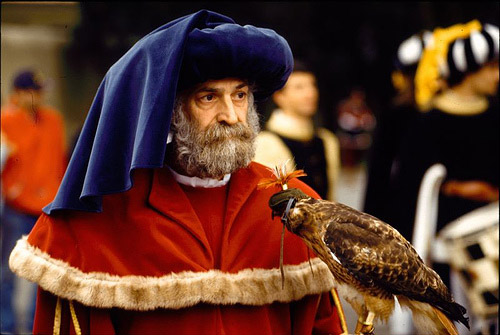
He takes care of the future,
a figure of authority for
his poor followers
with the desire of being rich.
He knows about the bargain
better that a merchant;
he could show to a lawyer
how to do his job.
Without paper and legal education,
he is wiser that many of his companions
and proper as the royalty
and he will defend himself and his followers even in the worst case.
The Noble Pirate

The Captain rode a horse
with the abilities that his noble title gives.
many Vintage he brought
his prisoners he freed.
The noble pirate hero in the seas
an enemy only could see his ship sank
hero from Brattain
and in France people was waiting for him.
An excellent companion he was
every creek he knew
the unbury Maudelayne was his treasure,
and his beard not only shows his wisdom.
Men in Uniforms, Women in Royal Dresses

The rich five wearing their uniforms
and showing their silver and modals.
the honorable carpenter and Dyer’s wives
want to be called madams.
The Haberdasher and Weaver’s wives
always wants to show their position;
even their mantle was carried
as a wonderful queen.
The carpet-maker as well as the five
showing his wealthy,
but surviving as well as the rest
showing wants what he thinks he is.
The Free Monk

The studious monk who does not
like to read or to pray
he was one of the confined,
but he was free to hunt in open ground.
The monastery was his house,
his free food and his free shelter;
he respected his beliefs and his rules
and he took care of the monastery he left.
His first purpose himself,
second to help women,
his clean soul was reflected,
in his behavior and body.
Subscribe to:
Posts (Atom)